
Overview
Australian student-athletes heading to the United States to compete in NCAA programs must meet specific insurance requirements before they can train, compete, or enrol. This page provides general information only to help families understand how NCAA insurance rules work, what colleges typically require, and how U.S. healthcare differs from Australia.
Important: This information is not personal advice. Requirements vary between colleges, conferences, and athletic departments.
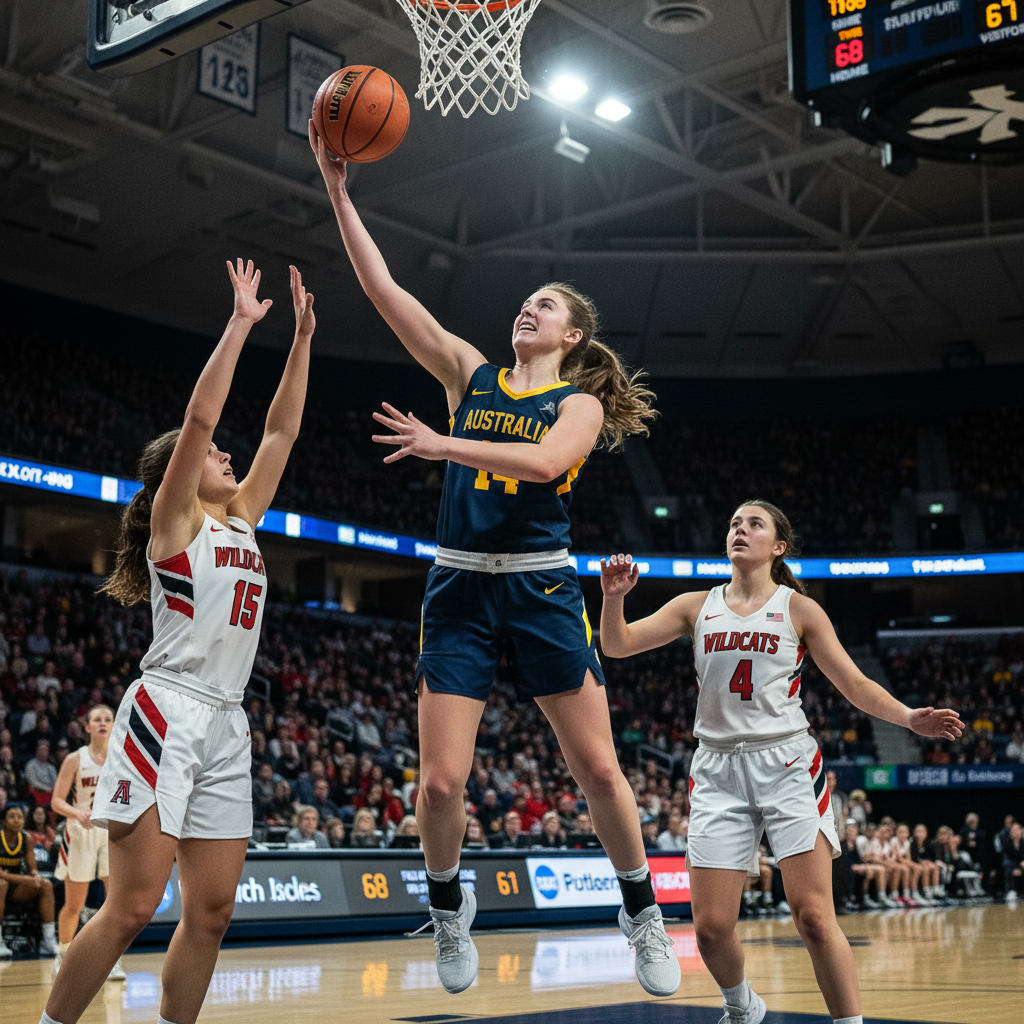
NCAA Policy
What the NCAA Requires
The NCAA (and NAIA & NJCAA) requires all college student-athletes to carry health insurance in order to participate in any NCAA sport at any Division level. Every student-athlete should ensure three basic criteria are met before entering college to play sports:
The student has a medical insurance policy that is equal to or greater than the deductible offered by the NCAA Catastrophic Injury Insurance Program
The student's university or college has provided a certificate stating the insurance policy is in place and active
The health insurance policy will be active through all years the student is participating in college-level NCAA sports
At a basic level, the NCAA requires all college-level student-athletes to carry health insurance. That policy can be through a parent's insurance, a private student plan, or through the university.
USA College Cover's partner insurers provide primary unlimited overseas medical cover with uncapped limits.
Prior to 2005, many students and their parents had to pay out of pocket for expenses due to the cost and nature of some sports injuries. However, the NCAA passed legislation in 2005 that requires all universities to certify students have adequate coverage before they participate in college-level sports.
Expectations
Typical Coverage Expectations
While each college sets its own rules, many require insurance that includes:
Overseas Medical Treatment
Hospitalisation & Surgery
Diagnostic Imaging (X-ray, MRI, CT)
Specialist Treatment
Rehabilitation & Physiotherapy
Catastrophic Injury Coverage
Minimum limits (vary by institution): Some colleges require specific minimum coverage amounts, such as USD $50,000–$250,000 per injury, with no exclusion for sports-related injuries, and coverage valid for the entire academic year. These figures vary widely between institutions.
Exclusions
Common Exclusions to Be Aware Of
Australian families are often surprised by exclusions in U.S. insurance policies. Common exclusions may include:
Pre-existing medical conditions
Non-emergency treatment
Mental health services
Dental treatment
Vision care
Injuries outside official training or competition
High-risk or non-college sporting activities
Always check the specific policy wording provided by the college or insurer.
Compliance
Proof of Insurance
Before an athlete can participate, colleges typically require:
A certificate of insurance
Policy wording showing sports coverage
Confirmation of U.S. validity
Proof of coverage limits
Emergency contact details
Some colleges require documents to be submitted before arrival in the U.S.


Outcome
What Happens if Coverage Does Not Meet Requirements
If an athlete's existing insurance does not meet NCAA or college standards, the college may:
Require the athlete to purchase a college-approved plan
Require additional documentation
Delay athletic clearance
Prevent participation until coverage is confirmed
This is a common situation for international athletes.
Comparison
How U.S. Healthcare Differs from Australia
Australian families should be aware that:
No Medicare-Equivalent Universal Healthcare
The U.S. does not have Medicare-equivalent universal healthcare for all citizens and residents.
Significantly Higher Medical Costs
Medical costs can be significantly higher than in Australia, even for routine care.
Expensive Emergency Care
Emergency treatment, hospital stays, and imaging can be expensive — far more than Australians expect.
Insurance Is Essential
Insurance is essential for managing unexpected medical bills, which can otherwise be substantial.
Understanding these differences helps families prepare before departure.
NCAA Program
NCAA Catastrophic Injury Insurance Program
Underwritten by Mutual of Omaha Insurance Company · Policy SB04CCA-P-33898 · Period 8/1/26 – 7/31/27
The NCAA Catastrophic Injury Insurance Program — paid for by the NCAA on behalf of all member institutions — covers student-athletes, student coaches, student managers, student trainers, and student cheerleaders who are catastrophically injured while participating in a Covered Event. It is an excess-over-all-other-insurance program: it activates only after all other valid insurance has been exhausted and covered expenses exceed the $90,000 deductible.
It is not a substitute for comprehensive personal medical and travel insurance. The deductible must be funded by the athlete's own primary insurance — and everything below that threshold is entirely out-of-pocket without it.
Key Policy Facts (2026–27)
- • Maximum benefit per insured per covered accident: $20,000,000 (lifetime)
- • Covered accident deductible: $90,000
- • Benefit percentage after deductible: 100%
- • Benefit period: Lifetime
- • Policy nature: Excess over all other valid and collectible insurance
- • Deductible satisfaction period: 24 months from the covered accident
Medical, Dental & Rehabilitation
$20,000,000 lifetime max at 100% after the $90,000 deductible. Covers hospitalisation, surgery, ICU, outpatient treatment, dental, and rehabilitation expenses.
Home Health & Custodial Care
Combined Home Health Care and Custodial Care: up to $127,500/year (CPI-indexed from Jan 2027). Private Duty Nursing: up to $250,000/year.
Outpatient Physical Therapy
Up to $75,000 per calendar year. Includes heat treatment, diathermy, ultrasonic, manipulation, massage therapy, and acupuncture.
Prosthetic Devices
$100,000 in the first 2 years post-accident; $100,000 ($200,000 for above-knee amputation) per 10-year period thereafter. Lifetime max $500,000–$750,000.
Total Disability Benefit
$400/month for the first 12 months, then $2,700/month for life (increasing 3% annually). Offset by 50% of after-tax earnings above $1,000/month.
Partial Disability Benefit
$270/month for first 12 months, then $1,800/month (increasing 3% annually). Offset by 50% of after-tax earnings above $1,400/month.
Special Expense Benefit
Home and vehicle modifications: $175,000 (years 0–10), $70,000 (years 10–20), $85,000 (years 20–30), $105,000 (years 30–40), $125,000 per decade thereafter.
College Education Benefit
Full standard cost of attendance for undergraduate and/or graduate degree for a totally/partially disabled athlete. Lifetime max: $120,000.
Vocational Rehabilitation
Reasonable and customary expenses for vocational rehabilitation programs and counselling to enable gainful employment. Lifetime max: $60,000.
Adjustment Expense Benefit
$50,000 lifetime: family travel ($6,000/member), caregiver training ($5,000), and 75% of spouse/guardian lost earnings up to $500/week for 26 weeks.
Assimilation Benefit
Up to $50,000 lifetime for specialised intensive rehabilitation at accredited spinal cord, nervous system, or closed head injury medical facilities (within 2 years of accident).
Accidental Death Benefit
$25,000 if death occurs within 24 months of the covered accident.
Repetitive Motion Injury
Separate $90,000 deductible; 100% of medical and rehabilitation benefits up to $200,000 lifetime per insured person.
Ancillary Injury Benefit
Medical and dental expenses for a separate accidental injury sustained while the insured is receiving Total or Partial Disability benefits. Lifetime max: $100,000.
What Constitutes a "Covered Event"
Qualifying intercollegiate sport competition scheduled by the participating school
Official team activities, conditioning, and practice sessions
School-authorised and school-paid team travel to/from covered events
Temporary stays at covered event locations where activity is authorised by the school
Cardiovascular accident or stroke caused by exertion during a covered event
Student cheerleader practice and pep rallies under a safety-certified coach
Critical Gaps — What the NCAA Catastrophic Plan Does NOT Cover
The $90,000 deductible
You must fund or insure this entirely yourself before NCAA coverage activates. Without primary insurance, this is 100% out-of-pocket.
Illness and disease (generally)
The policy excludes illness and disease except where illness is a direct result of the covered accident, or a cardiovascular event caused by exertion.
Non-catastrophic everyday injuries
Any injury where costs don't reach $90,000 receives zero benefit from this program.
Emergency medical evacuation
No repatriation or emergency transport home to Australia/NZ is provided.
Travel disruption & cancellation
No coverage for flight cancellations, delays, missed connections, or lost luggage.
Camps, clinics & non-school events
Activities not conducted by the participating school — including camps, clinics, alumni events, and non-school competitions — are excluded.
Mental health (very limited)
Physician visits capped at $90/day, max 50 visits/year. Hospital inpatient limited to 45 days/year (unless caused by a covered brain injury).
Activities outside covered travel
Personal travel, off-season recreation, and any activity not directly authorised and organised by the school are not covered.
Official NCAA Document
The following document is publicly available and outlines the full terms of the NCAA Catastrophic Injury Insurance Program for the 2026–27 policy period.
NCAA Catastrophic Injury Insurance — Benefit Summary 2026–27
Underwritten by Mutual of Omaha · Full schedule of benefits, disability provisions, definitions, and exclusions.
View PDFNCAA Catastrophic Injury Insurance Program — Official Page
Official NCAA website page covering eligibility, how to file a claim, and program overview.
Visit NCAA.orgHow USA College Cover Partner Insurers Fill the Gaps
Our partner insurers — including CoverMore, Europ Assistance, nib Travel Insurance — offer comprehensive Student-Athlete Medical & Travel Cover specifically designed to work alongside (and fund the deductible for) the NCAA Catastrophic Plan.
Funds the $90,000 CAT deductible
Primary unlimited overseas medical cover means all serious sports injuries are covered from dollar one — your expenses satisfy the CAT deductible automatically.
Everyday sports injuries
Covers non-catastrophic injuries like fractures, ligament tears, dislocations, and concussions that fall below the $90K threshold.
Emergency medical evacuation
Unlimited emergency medical evacuation and repatriation back to Australia/NZ — a critical benefit absent from the NCAA CAT plan.
Travel benefits
Trip cancellation, flight delays, lost luggage, and travel disruptions for the full policy period.
Illness & sickness cover
The NCAA plan generally excludes illness. Our partner plans cover sickness and overseas medical treatment for illness throughout the policy period.
Cover during semester breaks
Protection continues through mid-year breaks, holiday travel, and time spent outside the official college training and competition calendar.
General Advice Only. Coverage details, limits, and conditions vary between partner insurers and plans. Refer to the relevant Product Disclosure Statement (PDS) for full terms, conditions, and exclusions before purchasing.
Key Points for Australian Families
NCAA athletes must have valid U.S. medical insurance
Coverage must include sports-related injuries
Requirements vary between colleges
Documentation is usually required before participation
U.S. healthcare costs are significantly higher than in Australia
This page provides general information only
⚠️ This page provides general information only and does not constitute financial, legal or insurance advice. Insurance eligibility, coverage limits and exclusions vary between providers and plans. You should verify all requirements with your college or athletic association and seek professional advice before purchasing a policy. Our Insurance Waiver Request Letter and Compliance Summary request a waiver only and do not guarantee that a waiver will be granted; colleges may still require you to hold their own Student Health Insurance Plan (SHIP) or meet additional, localised requirements at their own discretion.
General Information Warning: This page provides general information only and does not take into account your personal circumstances. Insurance requirements vary between colleges, conferences, and states. Always refer to the specific documentation provided by your college or athletic department.